

Hanlong Liu
Academician, Chinese Academy of Engineering
Professor Hanlong Liu is an Academician of the Chinese Academy of Engineering, Director of the Academic Committee of Chongqing University, the former Executive Vice President of Chongqing University, a Distinguished Professor of the Chang Jiang Scholars Program, and a laureate of the National Science Fund for Distinguished Young Scholars. He is also a member of the Academic Degrees Committee of the State Council, the Science and Technology Committee of the Ministry of Education, and the Science and Technology Committee of the Ministry of Water Resources. He serves as the Chair of TC303 of the International Society for Soil Mechanics and Geotechnical Engineering (ISSMGE) and Editor-in-Chief of Biogeotechnics and Journal of Civil and Environmental Engineering.
Professor Liu has long been engaged in teaching and research in environmental geomechanics and disaster prevention and mitigation engineering, with a series of landmark research outcomes in high-speed railways, expressways, high earth-rock dams, hydraulic reclamation (land and island creation), and the conservation of geotechnical cultural relics, among other fields. His academic and technological contributions have been recognized with numerous prestigious awards, including two National Technological Invention Awards (Second Class), one National Science and Technology Progress Award (Second Class), and two National Teaching Achievement Awards (Second Class). He is also the recipient of the inaugural National Innovation and Advancement Award, the Ho Leung Ho Lee Foundation Award for Scientific and Technological Innovation, the Guanghua Engineering Science and Technology Award, the Mao Yisheng Grand Prize in Soil Mechanics and Geotechnical Engineering, the Chandrakant S. Desai Medal for Excellence in Geomechanics from the International Association for Computer Methods and Advances in Geomechanics (IACMAG), the Outstanding Contributor Award for the Chang’e 4 Mission of China’s Lunar Exploration Program, and the Chongqing Science and Technology Outstanding Contribution Award. Professor Liu has authored and co-authored more than 350 high-impact SCI papers, published sevenmonographs, and edited seven national and industrial standards. He was named a Highly Cited Chinese Researcher by Elsevier from 2018 to 2024 and a Highly Cited Researcher globally by Clarivate from 2023 to 2024.
Title
Innovation in Low-Carbon Bio-Based Construction Technologies
Abstract
Human beings have thrived on Earth and constructed numerous habitats for survival. From primitive, simple shelters built in ancient times for protection against wind and rain, to modern reinforced concrete structures like skyscrapers and high-speed railways, civil engineering construction technologies have undergone epochal evolutions. Amid global climate change and ecological degradation, the drawbacks of traditional engineering construction, such as high energy consumption, high emissions, heavy pollution, and poor degradability of solid waste materials, have severely hindered the implementation of the dual-carbon development strategy and the advancement of construction technologies, transforming civil engineering construction into an urgent imperative. To achieve sustainable development, civil engineering must minimize the depletion and damage of natural resources. Aligned with China’s dual-carbon strategic goals, the global frontier of biotechnology, and the transformative development of the construction industry, bio-based construction is proposed as an approach that enables harmonious coexistence between humans and nature in line with the dual-carbon strategy. It is grounded in scientifically based planning and design, aiming to integrate engineering projects with surrounding ecological environments and preserve the integrity and stability of ecosystems. This report elaborates on the connotation of bio-based construction, establishes its technical system, and systematically discusses its theories, technologies, materials, equipment, and engineering applications across four categories: microbial construction, plant-based construction, animal-derived construction, and bionic construction. Finally, the development prospects of the bio-based construction discipline and industry are discussed.

Liwen Pan
CCCC First Harbor Engineering Co., Ltd.
Mr. Liwen Pan, Member of the Communist Party of China, graduated from Dalian University of Technology in 1994 with a bachelor’s degree in Port and Waterway Engineering, and has been working at CCCC First Harbor Engineering Co., Ltd. ever since, devoting his entire career to construction management of major engineering projects.
During his professional career, he has participated in the construction and management of more than ten key projects both in China and abroad, including Qinhuangdao Port Phase I Coal Terminal Expansion Project, Qinhuangdao Port Phase V Coal Terminal Project, multiple berth projects at Jinzhou Port, No. 2 Dry Dock Cofferdam Project of Bohai Shipbuilding Heavy Industry in Huludao, Shanhaiguan No. 0 Terminal Project, Caofeidian Workboat Terminal Project, Dongguan Haichang 50,000 DWT Coal Terminal Project, Guangzhou Port Nansha Port Area Grain and General Cargo Terminal Project, Mombasa–Nairobi Standard Gauge Railway in Kenya, Karnaphuli River Underwater Tunnel Project in Bangladesh, and Dalian Bay Subsea Tunnel Project. Mr. Pan has successively held key positions, including Project Manager for multiple projects, Deputy Chief Engineer, Assistant General Manager, Deputy General Manager of the 5th Company of CCCC First Harbor Engineering Co., Ltd., Chief Engineer of the Engineering Department of CCCC First Harbor Engineering Co., Ltd., and Deputy Chief Engineer of the Bureau. In 2006, he was awarded the title of Excellent Project Manager for National Water Transport Engineering. Projects under his leadership have received numerous high-level honors: two National High-Quality Project Awards, two Tien-Yow Jeme Civil Engineering Prizes, one Luban Prize for Construction Project, two High-Quality Water Transport Engineering Awards, and one CCCC High-Quality Engineering Award. In scientific research, Mr. Pan has been honored with one First Prize of Hebei Provincial Science and Technology Achievement Award and one Second Prize of Science and Technology Progress awarded by the Chinese Institute of Navigation. He also holds more than 20 authorized patents.
Title:
Research and Application of Key Construction Technologies for Dalian Bay Submarine Tunnel
Abstract
The Dalian Bay Submarine Tunnel Project is a major livelihood project in Liaoning Province implemented under the PPP (Public-Private Partnership) model. It is also the first 100-year immersed tube tunnel constructed under cold conditions in northern China, a pioneering effort worldwide. As a super project in China’s transportation construction history, it features high technical requirements, complex construction environments, and strict environmental protection standards. Throughout the entire construction process, the project adhered to a technology-first principle. Through technological research and development, intelligent construction, and equipment upgrading, it solved numerous engineering challenges, continuously made breakthroughs in the field of cross-sea immersed tube tunnel construction, and tackled “bottleneck” technologies. Eventually, it transformed from a “follower” to a “leader”, achieving world-leading standards and further consolidating China’s advantages in the global cross-sea immersed tube tunnel construction field.

Zaijin You
Dalian Maritime University
Zaijin You is a Professor and PhD Supervisor, Director of the Collaborative Innovation Center for Port and Shipping Safety, Dalian Maritime University. He earned his PhD in Coastal Engineering from the University of New South Wales (UNSW), Australia. A recipient of the National Science Fund for Distinguished Young Scholars, Professor You is also recognized as a Climbing Scholar under Liaoning Province’s Xingliao Talents Program, a Leading Talent of Dalian, a Distinguished Overseas Expert under Shandong Province’s Taishan Scholars Program, a selected expert of the Foreign Experts 100 Program, a member of a Huang Danian-style Teaching Team in higher education, an expert in the High-end Think Tank Talent Pool, an Outstanding Postgraduate Supervisor, and a Distinguished Expert under Yantai City’s Double Hundred Talent Program. With 26 years of overseas education and professional experience, Professor You has long been dedicated to research in port, waterway and coastal engineering, as well as transportation engineering. He has led numerous key research projects, including the National Science Fund for Distinguished Young Scholars, major funding projects from the Commonwealth of Australia, National Natural Science Foundation of China Key Programs, Key R&D Programs of the Ministry of Science and Technology, and the Knowledge Innovation Program of the Chinese Academy of Sciences. Professor You concurrently serves as a Visiting Researcher at the Institute of Oceanology, Chinese Academy of Sciences; an evaluation expert for national talent programs and research funding schemes; a Council Member of the Coastal and Estuarine Branch of the Chinese Society of Oceanology and Limnology; Vice Chair of a technical committee of the International Society for Marine Geotechnics and Environment; and Guest Editor and Associate Editor for several international journals. He has been granted more than 35 domestic and international patents and has authored or co-authored over 200 academic papers. His research achievementshave been honored with the Featured Paper Research Award by AIP (American Institute of Physics) Science Light and the international Best Research Award, among other distinctions.
Title
Observation Methods and Engineering Applications of Ocean Waves
Abstract
Ocean waves are the core marine hydrodynamic element for the construction of ports, waterways, offshore engineering, and the development of marine resources. This report covers the introduction of marine hydrodynamics, wave observation technologies, wave data analysis, and design wave height calculation. It focuses on the new “zero-crossing wave energy” wave analysis method, design wave height calculation, and the temporal and spatial distribution of wave energy, and discusses the main factors affecting the calculation accuracy of design wave height.
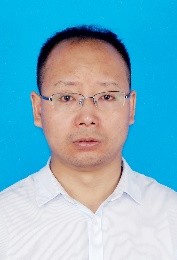
Wang Gang
Hohai University
Wang Gang is a Professor, PhD Supervisor, and a Selected Member of the National High-Level Young Talents Program. Professor Wang’s research focuses on the disaster-causing mechanisms of ocean waves and their numerical simulation and prediction methods, including harbor resonance and trapped waves over islands and ocean ridges. He received his BSc in Marine Technology from Hohai University and his PhD in Port, Coastal and Offshore Engineering from Dalian University of Technology. He was a visiting researcher at Newcastle University, UK, from 2015 to 2016. Professor Wang has led major research projects, including the National Natural Science Foundation of China, National Key R&D Program Subtopics, and the Jiangsu Outstanding Youth Fund. He has published more than 100 academic papers and received the Special Prize of the Science and Technology Award from the China Water Transport Construction Industry Association and the Second Prize of the China Ocean Engineering Science and Technology Award. He has also been selected into high-level talent programs, such as the High-level Scientific and Technological Innovation Talents of the Ministry of Natural Resources, the Excellent Young Backbone Teachers of the “Qinglan Project” in Jiangsu Universities, and the Outstanding Young Scientific and Technological Talents in Marine Field of the State Oceanic Administration.
Title
Mechanism and Numerical Prediction of Port Resonance Disasters Induced by Medium- and Long-Period Waves
Abstract
Port resonance refers to the phenomenon of significant water oscillations within a harbor basin when the incident long-period waves from the open sea are close to the natural period of the harbor. Such resonance can trigger severe motions of moored vessels, reduce operational efficiency, and, in severe cases, lead to accidents such as mooring line rupture, ship collision with wharves, and uncontrolled vessel drift, posing a substantial threat to port operation and safety. This report first presents physical model tests on multimode coupled resonance in regular rectangular harbors, revealing the energy evolution process among different resonance modes. Meanwhile, numerical simulations are conducted to validate the analytical theory of port resonance excited by shear currents, clarifying the characteristics of harbor oscillations under the combined action of shear currents and waves. Second, corresponding analytical theories are proposed for regular pentagonal, regular hexagonal, and elliptical harbors, providing a theoretical basis for resonance prediction in practical ports. In addition, a snowflake fractal harbor layout is developed to mitigate port resonance. Third, considering the variable water depth in real ports, analytical models of port resonance are established for sloping, hyperbolic cosine, and exponential topographies. It is found that the refraction effect induced by bathymetric variation can trigger transverse resonance. For deep-sea island and reef ports, an island-harbor coupled resonance theory is proposed. Finally, based on the impacts of practical port resonance disasters, future research directions are pointed out.

Zhong Xiao
Tianjin University
Zhong Xiao is a Professor and PhD Supervisor at Tianjin University. Professor Xiao has been selected for the National High‑Level Young Talents Program, the Talent Program of the Ministry of Transport, and the Tianjin “131” Innovative Talents Training Project, among other prestigious talent schemes. In recent years, he has led eight national research projects, including projects under the National Key R&D Program of China and the National Natural Science Foundation of China, as well as nearly 40 research projects commissioned by enterprises and public institutions. He has published more than 100 academic papers. Professor Xiao’s research and engineering achievements have been recognized with numerous awards, including three Second Prizes of Tianjin Science and Technology Progress Award (two as the first completer), one First Prize of the China Ocean Engineering Science and Technology Award (first completer), and one Special Prize of Excellent Engineering Investigation and Design of Guangdong Province (first completer). As a key contributor, Professor Xiao has also received the Special Prize and First Prize of the Science and Technology Award from the China Water Transport Construction Industry Association, the First Prize of Tianjin Excellent Investigation and Design (“Haihe Cup”), the Second Prize of Qingdao Science and Technology Progress Award, and the First Prize of Excellent Engineering Investigation and Design of Guangdong Province. His research outcomes have been successfully applied to landmark national mega‑projects, such as the Hong Kong‑Zhuhai‑Macao Bridge and the Shenzhen‑Zhongshan Link, providing key scientific and technological support for ensuring the safety of national infrastructure.
Title
An Efficient Calculation Method for Failure Probability of Open-Type Piled Wharves Based on Macroelement Method and Monte Carlo Sampling
Abstract
The upsizing of vessels contributes to the reduction of carbon emissions per container, while open deep-water wharves enable the berthing of large ships and eliminate sediment deposition issues. Given the threats posed by climate change, it is urgent to evaluate the failure probability of open wharves, especially piled wharves with members of low section stiffness, to identify vulnerable components that require toughness improvement. This study proposes an efficient calculation method using the macroelement method and Monte Carlo simulation to address this challenge. Environmental parameters are randomly sampled based on probability distributions, and structural responses under various loadings are rapidly computed via the macroelement method. The proposed method has been validated against experimental results and finite element analyses. Both local and global failure criteria are adopted for failure assessment, realizing automated evaluation of the failure probability of piled wharves. In addition, parametric studies are conducted to investigate the effects of pile dimensions, steel grade, and environmental factors on failure probability. The results show that the failure probability of open-type piled wharves decreases with the increase of steel grade, pile diameter, and wall thickness, among which wall thickness exhibits the most significant influence. Meanwhile, failure probability rises with increasing wave height, water depth, current velocity, and wind speed, but decreases with increasing wave period. Among these parameters, wave period shows the dominant effect, followed by wave height and then water depth. Through failure mode analysis of an engineering case, it is found that 86.9% of failures originate from pile members, mainly due to excessive von Mises stress (75.0%) and axial overloading (19.9%), demonstrating the necessity of strengthening, monitoring, and toughening for the pile foundation system of piled wharves.
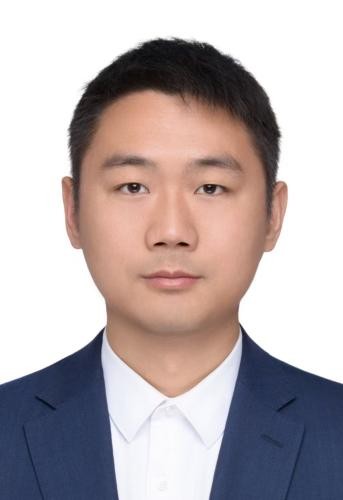
Xuecheng Pan
CCCC Guangzhou Dredging Co., Ltd.
Xuecheng Pan is the Chief Engineer and Deputy General Manager of CCCC Guangzhou Dredging Co., Ltd. Mr. Pan specializes in project management for port, waterway and coastal engineering, with 15 years of technical and management experience in dredging and reclamation engineering. He has been selected into the first cohort of the Excellent Young Talents Pool for Scientific and Technological Innovation, Overseas Business and Emerging Business of CCCC. He has demonstrated outstanding capabilities in scientific and technological innovation, achievement promotion and solving major engineering challenges. As a core technical principal, he has achieved breakthroughs in environmentally friendly rock removal in extremely hard reefs, innovative dredging technologies, and green low-carbon construction. He has led several award-winning projects at the national level, including the Tema New Container Terminal Project in Ghana and the Guishan Anchorage Expansion Project of Guangzhou Port. Mr. Pan holds a number of authorized invention patents, provincial and ministerial-level construction methods, and has received multiple science and technology awards and published academic papers. He is recognized as an outstanding professional in the dredging industry with both strong technological innovation capabilities and extensive practical experience.
Title
Research on Eco-Friendly Rock Breaking Technology and Equipment in Marine Environment
Abstract
This project closely aligns with four national strategies: building a maritime power, a transportation power, ecological civilization, and achieving self-reliance and strength in science and technology. It aims to address the urgent demand for non-blasting underwater rock removal in major projects such as port and waterway construction, as well as cross-sea transportation corridors.
The project has successfully tackled several core technical bottlenecks: insufficient theoretical support for non-blasting rock breaking due to unclear rock fragmentation mechanisms underwater, low efficiency of conventional technologies in breaking rocks exceeding 40 MPa unconfined compressive strength, difficulty controlling operation accuracy in 40-meter-deep water with high flow velocities, and the lack of effective non-blasting methods for ultra-hard rocks up to 200 MPa.
Through the whole-chain innovation of theoretical analysis – equipment development – engineering application, the project has achieved the following key outcomes:
Theoretical Breakthroughs: The impact fragmentation laws and damage evolution mechanisms of underwater rocks have been revealed, and a comprehensive evaluation model for rock breaking performance has been established.
Technical Innovations: High-precision direct excavation using grabs and high-frequency vibratory techniques for soft rock have been developed. An innovative bubble-type anti-pollution curtain system for dredging projects has been pioneered, which effectively controls suspended sediment diffusion.
Equipment Upgrading: Key difficulties in precise positioning and visualization in deep water (40 m) have been overcome. A precise positioning algorithm for hydraulic impact hammers and an intelligent sonar data processing system have been developed.
Innovative Construction Technology: An eco-friendly reef-clearing technology featuring coupled drilling, splitting, and chiseling has been created for the first time. A new series of Mn13 high-strength wear-resistant rock-breaking hammers has been developed, successfully solving the fragmentation problem of ultra-hard rocks up to 200 MPa.
In terms of standardization and academic achievements, the project has led the establishment of a complete industrial standard system, including one international standard, two national standards, and 5 industrial construction methods. Meanwhile, three academic monographs have been published, 20 SCI/EI-indexed papers released, and 16 invention patents authorized, forming a full-chain independent intellectual property system covering theory, equipment, technology and standards.
The project achievements have been successfully applied in nearly 20 major domestic and overseas projects, including the Shenzhen-Zhongshan Link, Xiamen-Jinmen Corridor, and Ghana Tema New Container Terminal Project, solving a series of world-class challenges in deep-water hard rock excavation and construction in ecologically sensitive areas.
By replacing traditional reef blasting, the project has realized coordinated development of engineering construction and ecological protection, strongly supporting the implementation of the four national strategies. It has not only generated remarkable economic benefits but also driven a historic leap of China’s marine rock treatment technology from a follower to a global leader, providing an advanced Chinese solution for underwater hard rock treatment worldwide.
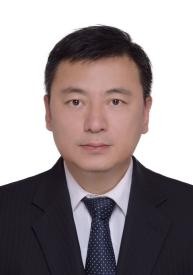
Jianyu Li
CCCC Fourth Harbor Engineering Institute Co., Ltd.
Jianyu Li is a Professorate Senior Engineer at CCCC Fourth Harbor Engineering Institute Co., Ltd. Dr. Li holds qualifications as a Registered Geotechnical Engineer, Registered Road Engineer, Registered Consulting Engineer, and First-Class Constructor (Port & Waterway). His professional focus lies in the design and research of geotechnical and underground engineering. Dr. Li has led or participated in nearly 300 projects, including the main works of the Hong Kong-Zhuhai-Macao Bridge, Shenzhen Bao’an International Airport Third Runway Reclamation Project, Nansha Port General Cargo Terminal Project, a super-large underground cavern project, Walvis Bay New Container Terminal Project in Namibia, Tibar Bay Container Terminal Project in Timor-Leste, and SM Reclamation Project in the Philippines. Dr. Li has been awarded one China Patent Excellence Award, four first or higher prizes of provincial and ministerial science and technology awards, and two second prizes of provincial and ministerial science and technology awards.
Title
Underwater Composite Foundation Treatment Technologies and Their Application
Abstract
This report introduces the types and functional settings of underwater composite foundations, focuses on the action mechanisms of underwater deep mixing columns (DCM) and sand compaction piles (SCP), and enumerates engineering cases adopting DCM and SCP technologies.
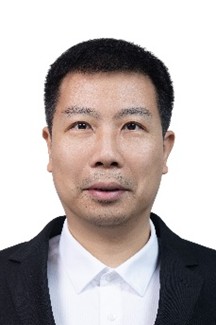
Zongxian Su
The Hong Kong University of Science and Technology (Guangzhou)
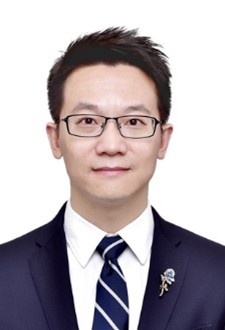
Zongxian Su, Professorate Senior Engineer, is now a Senior Engineer of the Engineering Excellence Center, Practice Professor of Intelligent Mobility, The Hong Kong University of Science and Technology (Guangzhou). Dr. Su has participated in the design and research management of the main project of the Hong Kong–Zhuhai–Macao Bridge, as well as its related National Key Technology R&D Program. He previously served as Chief Engineer of Contract S08 for the immersed tube tunnel of the Shenzhen–Zhongshan Link, where he was responsible for on-site technical research and development and construction management. Dr. Su’s main research interests include construction theories and technologies for subsea tunnels, research and development of underwater robots for auxiliary construction, and intelligent freight pipeline transport systems. He has published more than 30 academic papers, including one SCI-indexed paper and seven EI-indexed papers. Among them, one paper was selected into the F5000—Top Academic Papers of China's Premium Science and Technology Journals, and another was recognized as a highly cited, highly downloaded paper with high PSCI. He has edited one monograph, been granted seven patents, and received the Special Prize and First Prize of provincial and ministerial Science and Technology Progress Awards.
Title
An Underwater Robot for Assisting the Installation of Immersed Tube Tunnel Segments
Abstract
To resolve problems existing in the installation process of immersed tube tunnel segments, such as complex underwater environment, low visibility, high safety risks of diver operations and low construction efficiency, we propose a set of functional requirements, key technology R&D and system integration scheme for an underwater robot auxiliary system. The robot has multi-mode movement capabilities, including swimming, crawling and surface adsorption, and integrates underwater terrain modeling and visual enhancement detection functions. It can replace divers to complete the detection and monitoring tasks of key processes such as guide rod slotting, monitoring of the initial compression state of the GINA waterstop during tube segment docking, and evaluation of the silting status of the crushed stone foundation layer before tube segment lowering. It can provide technical services and references for the detection and auxiliary operations of similar underwater projects.
Yewei Zheng
Wuhan University
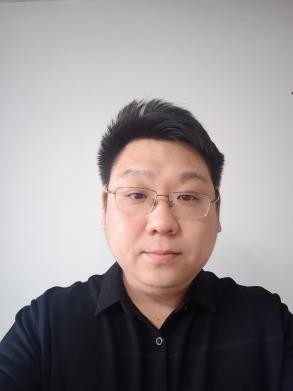
Yewei Zheng is a Professor at Wuhan University and Deputy Director of the University’s Infrastructure Management Department. He is a recipient of the Thousand Young Talents Program and serves as Principal Investigator for a Young Scientist Project of the National Key Research and Development Program of China. Professor Zheng’s research focuses on geosynthetic-reinforced soil structures, geotechnical earthquake engineering, soil dynamics, and unsaturated soil mechanics. He has led multiple national-level research projects, including a Young Scientist Project under the National Key Research and Development Program and General Projects of the National Natural Science Foundation of China. He has authored over 100 papers published in SCI- and EI-indexed journals. His honors and awards include the IGS Award from the International Geosynthetics Society, the First Prize of the China Highway and Transportation Society Award for Scientific and Technological Progress, and the Second Prize of the Hubei Provincial University Young Faculty Teaching Competition. Professor Zheng serves as Associate Editor of Geotextiles and Geomembranes, and as an Editorial Board Member of Computers and Geotechnics, Geosynthetics International, and the Chinese journal Rock and Soil Mechanics. He is also Secretary-General of the Reinforcement Committee of the International Geosynthetics Society, Secretary-General of the International Cooperation Working Committee of the China Technical Association on Geosynthetics, and Deputy Secretary-General of the Youth Working Committee of the same association.
Title
Seismic Catastrophe Mechanism of Immersed Tube Tunnels in Liquefiable Sand Sites and Key Technologies for Foundation Reinforcement
Abstract
With the in-depth implementation of the “Transportation Power” strategy and the advancement of regional coordinated development strategies such as the "Yangtze River Delta Integration", undersea immersed tube tunnels have become important transportation links connecting coastal urban agglomerations. Sandy seabeds are widely distributed and prone to liquefaction under seismic action, leading to a decrease in foundation bearing capacity and inducing tunnel uplift, which poses challenges to engineering safety. Based on centrifuge shaking table tests and numerical simulations, this study systematically analyzes the seismic catastrophe mechanism of immersed tube tunnels in sandy sites under horizontal and bidirectional seismic actions, and studies the seismic reinforcement effects of different foundation treatment measures. The research results provide a scientific basis and reference for the seismic design of undersea immersed tube tunnels.

Xingxing Zhang
China Institute of Water Resources and Hydropower Research (IWHR)
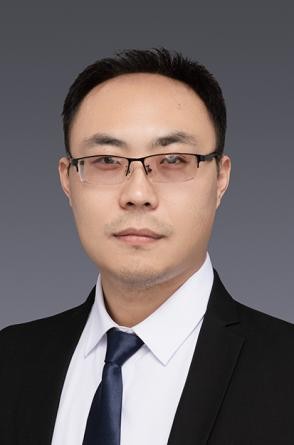
Xingxing Zhang is a Professorate Senior Engineer in China Institute of Water Resources and Hydropower Research (IWHR). Dr. Zhang specializes in numerical simulation and safety assessment of earth-rock dam engineering. She has led one subtopic under the National Key R&D Program of China and 16 commissioned research projects.She holds 11 authorized invention patents and has participated in compiling the Code for Design of Rolled Earth-Rock Dams issued by the Ministry of Water Resources.[Editor2.1] Her research and engineering achievements have been recognized with the following awards, including one Special Prize from the Chinese Dam Engineering Society, two First Prizes of Hydropower Science and Technology Progress Award, one First Prize of Yangtze River Science and Technology Award, and one Second Prize of Science and Technology Progress Award of Xizang Autonomous Region.
Title
Key Technologies for Stability Control of High Cofferdams on Deep Soft Foundations—A Case Study of the Upstream Cofferdam of the Lawa Hydropower Station
Abstract
The upstream cofferdam of the Lawa Hydropower Station is a high cofferdam structure constructed on deep soft overburden layers in the hydropower engineering field, featuring the largest soft soil thickness and the highest water-retaining head in similar projects. Its stability control is confronted with multifaceted technical challenges. This report mainly presents the supporting role of numerical simulations (including slope stability analysis and finite element analysis) and hypergravity physical modeling in determining engineering schemes, as well as the application of optical fiber monitoring technology in deformation monitoring of high cofferdam structures.
Yonghong Wang
Qingdao University of Technology
Yonghong Wang is a PhD & Postdoctoral Fellow in Geotechnical Engineering, a Professor and PhD Supervisor at Qingdao University of Technology. Professor Wang’s research focuses on geotechnical engineering and pile foundation engineering in marine environments. He serves as Director of the Qingdao Engineering Technology Collaborative Innovation Center for Safety Assessment and Intelligent Diagnosis of Offshore Wind Power, Director of the Qingdao Smart City Green Geotechnical Engineering Research Center, and Deputy Director of the Qingdao Technology Innovation Center for Marine Dynamic Environment Simulation Test Platform. Professor Wang has presided over and participated in more than 20 national and provincial-level research projects, including the National Natural Science Foundation of China, National Key R&D Program of China, Shandong Provincial Key R&D Program, and Shandong Provincial Natural Science Foundation. He has also undertaken more than 30 technical consulting projects for enterprises. He has received over 20 provincial, ministerial and national first-class association awards, including the Shandong Science and Technology Progress Award (1st author), the Guangdong Science and Technology Progress Award (4th author), and two Qingdao Science and Technology Progress Awards (both 1st author). He has published more than 120 academic papers, among which 68 are indexed by SCI/EI. He holds 4 US invention patents and 16 Chinese invention patents.
Title
Dynamic Catastrophe Mechanism of Large-Diameter Monopile Foundations for Offshore Wind Turbines in Complex Marine Environments
Abstract
Offshore wind power is an important field in the development of renewable energy. As the most commonly used form of offshore wind power, monopile wind turbines are characterized by large size (diameter > 7m), variable loads (wind-wave-current coupling), large unit loads, and complex geological conditions. Accurately grasping the deformation and failure mechanism of large monopile wind turbines under complex marine loads is a key factor to ensure their design optimization and operational safety. However, the existing analysis methods independently calculate the upper wind turbine structure and the lower pile foundation with separate iterations, resulting in unclear deformation mechanisms, non-optimized design results, and unknown health status. This is a recognized “bottleneck problem” in the offshore wind power industry. Therefore, it is urgent to establish an “integrated” safety analysis method and intelligent diagnosis system.
Peng He
Shandong University of Science and Technology
Peng He is an Associate Professor and a PhD Supervisor of Shandong University of Science and Technology. Professor He’s research focuses on disaster prevention and mitigation, as well as intelligent management and control in underground engineering. He is recognized as a Think Tank Expert of the China Smart Engineering Research Association, an expert in the Shandong Provincial Science and Technology Expert Database, a high-level urgently needed talent in the new district of Qingdao, and a recipient of the Qingdao Youth Talent Award. Professor He concurrently serves as Member of the Youth Committee of the International Joint Research Center for Underground Space (IUCUS), Member of the Youth Professional Committee of the China Highway Construction Industry Association, Council Member of the Underground Engineering Branch of the Chinese Society of Rock Mechanics and Engineering, Member of a technical committee of the Chinese Geophysical Society, and Deputy Secretary-General of the Engineering Safety and Protection Professional Committee of the Shandong Rail Transit Society. In recent years, he has received more than 10 academic and scientific awards, including First Prize of Fujian Science and Technology Progress Award, Second Prize of Technology Invention Award by the Ministry of Education, and First Prize from the China Highway Construction Industry Association. Professor He has presided over more than 20 national, provincial and commissioned research projects, including 2 projects funded by the National Natural Science Foundation of China, the Shandong Provincial Key R&D Program, and the Shandong Provincial Technological Innovation Program. He has published over 70 SCI/EI-indexed papers, with more than 30 as first or corresponding author. He has been repeatedly listed as a Highly Cited Chinese Researcher. He also serves on the editorial boards of several prominent industry journals, including ROCKMB, IGEO, and DRE.
Title
Tunneling Safety Management and Intelligent Decision-Making System (TIS) and Laser-Based AI Video Monitoring Technology
Abstract
Safety management and emergency prevention and control during tunnel construction have long been critical issues in underground engineering. The key lies in how to technically realize information monitoring, integration, and post-feedback of geological attributes throughout the entire construction process. The Tunneling Safety Management and Intelligent Decision-Making System (TIS) is a data-driven service platform covering geological information capture, dynamic design optimization, multi-objective construction organization, and full-process process control. It integrates real-time sensing, scientific decision-making, active service, and intelligent supervision, providing technical support for disaster early warning, risk avoidance, and active prevention and control during tunnel construction. In addition, to strengthen the application of digital technologies in responding to public emergencies such as public health incidents, natural disasters, accidents, and social security incidents, and to comprehensively improve early warning and emergency response capabilities, the laser-based AI video automatic monitoring technology enables high-precision, high-density, high-frequency spatiotemporal monitoring of structures and synchronously generates digital orthophoto map (DOM) construction logs. This technology has been widely used in construction, transportation, water conservancy, rail transit, national land disaster prevention, mining, and cultural relics protection, providing strong support for the digital monitoring industry.

Wei Qin
Wenzhou University
Wei Qin is an Associate Professor, Master’s Supervisor, and Deputy Director of the Science and Technology Department, Wenzhou University. Professor Qin’s research focuses on deep-water foundations and the application of artificial intelligence. He has chaired many research projects, including one General Program and one Young Scientist Program of the National Natural Science Foundation of China, one China Postdoctoral Science Foundation Special Funding Project, one Public Welfare Project of Zhejiang Provincial Natural Science Foundation, one Open Fund Project of China Earthquake Administration, and seven social service and enterprise consulting projects. His research achievements have been recognized with one First Prize of Zhejiang Science and Technology Progress Award, one Special Prize of Science and Technology Award from the Jiangsu Society of Engineers. Professor Qin has published more than 20 SCI/EI-indexed papers as first or corresponding author in journals including Computers and Geotechnics and Acta Geotechnica, among which one paper was listed as a highly cited paper in 2025. He holds three US invention patents (two as first inventor) and 13 Chinese invention patents, plus one software copyright, all as first inventor. He has co-edited one industrial association standard and edited one group standard. He serves as a Youth Editorial Board Member for journals including Journal of Geomechanics (JGM), Journal of Marine Environmental Engineering (JMEE), Chinese Journal of Rock Mechanics and Engineering, The Ocean Engineering, and Journal of Changsha University of Science & Technology (Natural Science Edition). Professor Qin is also a Member of the Underground Space Committee, Chinese Society for Urban Studies, Corresponding Member of the Youth Committee, Soil Mechanics and Geotechnical Engineering Committee of the Chinese Civil Engineering Society, Member of the Innovative Transparent Soil Research Team, and Member of the Pile Foundation Professional Committee.
Title
Evolution Characteristics of Tamping Settlement Rate and Intelligent Prediction of Blast Waves for Underwater Blast Compaction of Rockfill Bed
Abstract
Underwater blast compaction technology for foundation beds features a remarkable compaction effect, adaptability to complex geological conditions, and controllable disturbance to the surrounding environment. It has been widely used in foundation bed treatment of marine engineering, such as port and wharf structures, cross-sea bridges, and offshore platforms, serving as a key process to ensure the safety and stability of superstructures. This technology uses instantaneous impact energy released by explosive detonation to induce intense vibration and displacement of bed particles, promoting particle rearrangement and pore filling, thereby improving the compaction degree and bearing capacity of the foundation bed. However, in the complex process of simultaneous underwater detonation of large charges impacting the rockfill bed, key issues, including the mechanism of blast shock wave action and compaction effects under different parameter combinations, still lack systematic and in-depth analysis in existing research. In view of this situation, experimental studies on underwater blast compaction characteristics of foundation beds are carried out combined with model tests. The research focuses on the internal compaction mechanism during blasting, the influences of different blasting parameters on the tamping settlement rate of rockfill beds, and the internal relationship among blasting parameters, foundation tamping settlement rate and bed pressure response is revealed. The influence weights of different blasting parameters (charge weight, spacing) on compaction effect are clarified. Meanwhile, intelligent reconstruction of blasting loads is conducted, providing an accurate propagation path of blast waves for the research. The results can provide a scientific basis for parameter design and quality evaluation of underwater blast compaction engineering.

Yue Song
Tianjin University
Yue Song is an Associate Professor and Master’s Supervisor of the School of Civil Engineering, Tianjin University. Professor Song’s research focuses on wave-coastal structure interaction, floating, towing, mooring and installation technologies for immersed tunnel elements, hydrodynamics of flexible net structures, and performance optimization of offshore floating collision protection systems. She conducts theoretical analysis, physical model tests and numerical simulations on the dynamic responses of various complex floating systems from nearshore to deep and offshore waters, and has achieved a series of systematic research outcomes. Professor Song has published more than 30 papers as first or corresponding author, including 20 SCI-indexed articles in top international journals such as Tunnelling and Underground Space Technology (premier journal in tunneling engineering) and Ocean Engineering (premier journal in ocean engineering). Currently, she is leading one General Program and one Young Scientist Program of the National Natural Science Foundation of China, one open fund project of a state key laboratory, and more than 10 research projects commissioned by enterprises and public institutions.
Title
Key Technologies for Floating, Transportation and Sinking of Large Immersed Tunnel Elements in Complex Environments
Abstract
The construction of immersed tube tunnels is of far-reaching strategic significance for the utilization of underwater space and the development of modern transportation systems. During the offshore floating, transportation and sinking of large immersed tubes, they are highly susceptible to complex marine conditions characterized by variable wave-current dynamic conditions and restricted navigational terrain, which directly threaten the stability of their attitude and the safety of maneuvering. With the continuous advancement of the “National Transportation Powerhouse” strategy, immersed tube tunnels have been rapidly developed in the Bohai Rim region, the Yangtze River Delta, and the Guangdong-Hong Kong-Macao Greater Bay Area. A systematic study is conducted on the integrated key technologies for the floating transportation, mooring and sinking of large tunnel elements. The research improves the coupled dynamic response mechanism of the immersed tube–installation barge system, establishes an accurate calculation model for the floating transportation and sinking characteristics of immersed tubes, and clarifies the influence mechanism of complex boundary conditions on the attitude of tunnel elements. This work helps to further improve the dynamic analysis and response prediction level of floating transportation and sinking operations for large immersed tubes, ensuring the safety of offshore operations and the rationality of construction decision-making.

Kening Chen
Trelleborg Group
Kening Chen is Director of the Asia Pacific Region of the Infrastructure Business Unit, Trelleborg Group. With nearly 20 years of project experience in civil and offshore engineering, Mr. Chen is a senior expert in engineering vibration mitigation and protection, waterproof sealing, dredging and transportation systems, and industrial rubber applications. He has been deeply involved in the construction of several landmark immersed tunnel projects in China, including the Hong Kong-Zhuhai-Macao Bridge tunnel-island section, the Shenzhen-Zhongshan Link, and the Dalian Bay Subsea Tunnel. Drawing on his extensive technical expertise and practical project experience, he has delivered professional solutions and technical support for these mega-scale cross-sea transportation infrastructures.
Title
Waterproofing and Sealing Solutions for Immersed Tube Tunnels
Abstract
As a core component of major river-crossing and sea-crossing transportation infrastructure, the sealing and waterproofing performance of immersed tube tunnels directly determines the service life, operational safety and durability of the project. It serves as a critical safeguard against high hydrostatic pressure, tidal disturbances, geological settlement and marine environmental erosion. Based on the full-life-cycle protection requirements of immersed tube tunnels, this solution integrates the whole-chain technologies, including material development, structural design, construction adaptability and operation-maintenance support, providing customized, high-performance and long-lasting systematic solutions. It has been successfully applied in a number of national key projects, such as the Hong Kong-Zhuhai-Macao Bridge Tunnel-Island Project, Shenzhen-Zhongshan Link and Dalian Bay Submarine Tunnel, helping the projects achieve the waterproofing target for a 120-year design service life.
The solution is developed around three core principles: layered protection, precise adaptation and long-term durability. Its core technical system covers two aspects: First, waterproofing of the tube segment body. By optimizing concrete mix proportions, improving impermeability grades, combined with special external waterproof coatings and construction joint water-stopping structures, the self-waterproofing capacity of tube segments is enhanced, thus controlling the risk of crack water seepage at the source. Second, joint sealing and waterproofing. A dual-seal system consisting of a GINA waterstop (primary seal) and an OMEGA waterstop (secondary seal) is adopted, together with customized rubber seals adaptable to structural displacement. Combined with the hydraulic compaction process, it achieves complete watertightness at tube segment joints, while ensuring the safety and durability of seals to effectively resist structural deformation caused by earthquakes, settlement and temperature variations.